Beginner

Get Your Own Pool Gear: What You Need When You’re Starting Out

By Xavi Vall · 20+ years teaching pool · 4 min read

At first you play with whatever the pool hall has: house cues, the table chalk and whatever else you can find. And that’s fine to start. But as soon as you want to get better for real, having your own gear makes a huge difference. These are the four things I recommend having from the start, plus a few more for when you progress.

In one sentence

The basic gear for a pool player who’s starting out is your own cue, good chalk, a glove and a case to carry and protect the cue; later you can add a tip tool, a training ball or a jump cue.

Why have your own gear

House cues are often warped, with worn tips, and each one weighs something different. If you play with a different one every day, your stroke never gets used to anything. With your own gear, everything is always the same, and consistency is exactly what you need to improve.
The complete method

Want to master your game step by step?

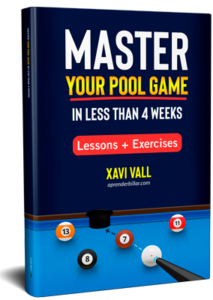
In Master Your Pool Game in Less Than 4 Weeks you get lessons and drills laid out week by week, using the same method you’ll find on this site. More than 1,300 players already own it.

  • “It will help you whether you’re a beginner or already have a lot of experience in the game of pool.”Alisa Dianisevichus, 12-time Belarusian national champion
  • “Excellent book, bought it yesterday. As a national coach, this is invaluable as a training aid.”Rafik S. Limbada, South Africa’s National Cuesport Coach
  • “Your book is a gem. It helped my twelve-year-old son correct mistakes in his game. Last week he won his first tournament.”Ignasi Oliver, father of a young pool champion in Bergen, Norway

1. Your own cue

It’s the most important investment. You don’t need the most expensive one, but you do need one that’s straight, with the tip in good shape, and two-piece so you can carry it. The usual weight in pool is between 18 and 21 ounces: pick the one that feels comfortable. You’ll find all the details in the guide to choosing a pool cue.
Xavi’s pick

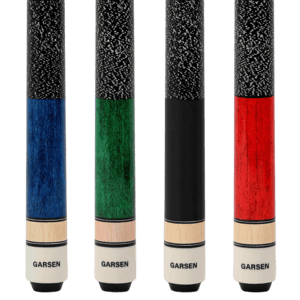
A budget starter cue set

If you’re just getting into pool and don’t want to spend much on your first cue, this set solves something you didn’t know you’d need: trying all four weights (18 to 21 oz) until you find yours, instead of buying one blind. I’d go straight for the 19 oz — the best balance for someone just starting out. And if you want it to last, add a good case: a cue that’s stored badly warps, and then you really have lost your money.

Affiliate link: if you buy, I earn a small commission at no extra cost to you.

2. Your own chalk

Chalk helps the tip grip the ball and prevents miscues. The chalk at pool halls is often worn down or poor quality. Good chalk leaves less residue and gives you more confidence, especially with spin. Chalk up before every shot. I explain it all in pool chalk: what it’s for and which one to choose.
Xavi’s pick

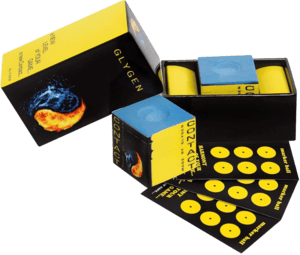
Glygen pool chalk

The price is surprising.

I’ve tried every chalk out there, and this is the one I use myself. It sticks well to the tip, it doesn’t throw off dust, it gives you incredible control and it really cuts down the risk of miscues, even if you forget to chalk for a while. It doesn’t dirty your hands, the cloth or the balls. Under the chalk there’s a strong magnet, so you can keep another magnet in your pocket and use it as a chalk holder.

Affiliate link: if you buy, I earn a small commission at no extra cost to you.

3. A glove

The glove goes on your bridge hand and makes the cue glide the same way every time, even if you sweat or it’s hot. It isn’t required, but many players won’t play without one anymore. If you’re left-handed, look for one sold for your hand. More in billiard gloves: what they’re for and which one to choose.
Xavi’s pick

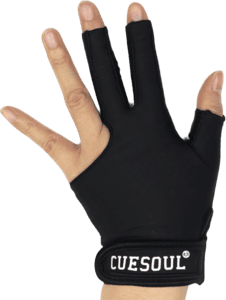
Cuesoul billiard glove

If you’re left-handed like me, you know how hard it is to find a good glove, because most are only sold for the left hand. That’s why I like this model so much: you can choose it for either the right or the left hand. I’ve been using it for a while and it checks every box: good, good-looking and affordable. It fits perfectly, doesn’t move while you play and lets the cue glide smoothly over your hand. In summer it becomes almost essential, because it stops sweat from making the cue sticky. It’s one of those accessories that, once you try it, you never want to play without.

Affiliate link: if you buy, I earn a small commission at no extra cost to you.

4. A cue case

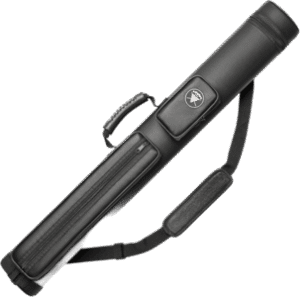
After choosing your cue carefully, the last thing you want is for it to warp or for the tip to get knocked while you carry it. A hard case or a padded soft case protects it and lets you carry your chalk and glove too. If your cue has already taken a hit, see how to fix a dent in a cue.
Xavi’s pick

The case that keeps you from ruining the cue you worked so hard to choose

After choosing the right cue, the last thing you want is for it to warp in some random bag, or for the tip to get knocked the first time you put it in the car. This hard case is made for exactly that: a suede lining so nothing rubs, foam that absorbs the impact if it falls, and room for two full cues. You didn’t pick the right cue just to risk it on the way to the pool hall, right?

Affiliate link: if you buy, I earn a small commission at no extra cost to you.

For later on

  • A tip tool: a shaper or scuffer to shape and texture the tip so it holds chalk well. Read how to care for your cue tips.
  • A cloth to clean the cue: wiping it down after you play removes chalk and sweat from the wood.
  • A training ball: it shows you where you’re hitting the cue ball. See training balls.
  • A jump cue: once you reach the pro level. See jump cues.

Quick checklist for the pool hall

Your gear

  • Your own two-piece cue
  • Good-quality chalk
  • A glove for your bridge hand
  • A hard or soft cue case

With this, and solid fundamentals, you’ve got everything you need. If you’re just starting, follow the step-by-step path to learning pool.

FAQ

What do I need to start playing pool?

For your first time, nothing: pool halls have cues and chalk. When you want to improve, the basics are your own cue, chalk, a glove and a case.

Do I really need a glove?

It isn’t required, but it helps the cue glide the same way every time, especially if your hands sweat.

What should I buy first?

The cue, because it has the biggest effect on your stroke. Then the chalk.

Written by Xavi Vall

He started playing pool at age 12 at Club Casa de España in the Dominican Republic and went on to win national championships there, both individual and team titles. He has been teaching pool at Aprender Billar since 2010 and is the author of five books.

Read his story

Xavi’s book

From your first shot to your local tournaments, all in one method.

Choose your store