
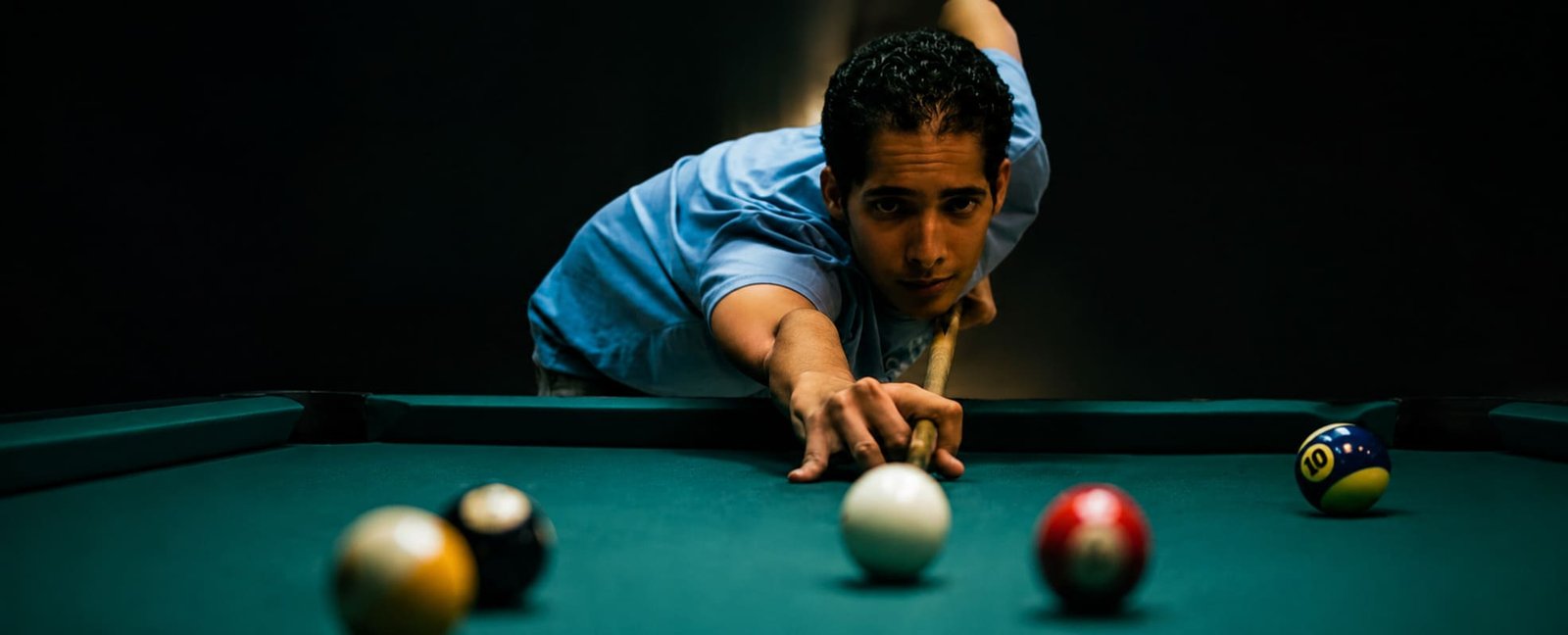
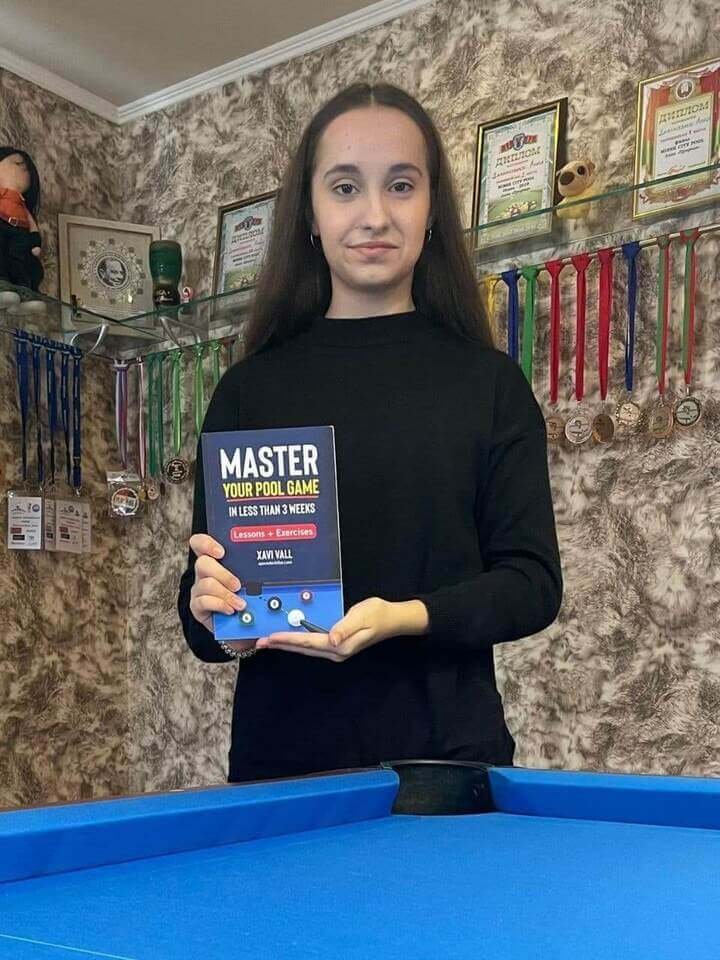
When you walk into a local pool hall or billiards club, it feels natural to grab a cue, ask for some balls, rent a table, and start playing pool eight-ball with your friends — sometimes without really knowing how to hold your own.
The way you grip the cue or position yourself is often where bad habits start, making it harder to actually learn to play like a professional later on.
That’s why I’m going to walk you through what you need to know from day one, so no one at the pool hall ever calls you a rookie, a beginner, or a novice again.
First come the fundamentals — the foundation every billiards player needs. These are made up of the grip (how you hold the cue with your back hand), the bridge (how you support it with your front hand), your stance, and your stroke. I go into more detail on this in the beginner section.
But before all that, the first thing you actually need to play pool is a cue. If you’re serious about this sport, sooner or later you’ll need your own — and choosing well from the start will help you improve faster and enjoy the game a lot more. Here’s my recommendation:
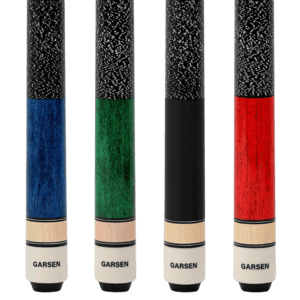
Recomendación de Xavi
El taco que compraron más de mil personas el mes pasado
Si estás empezando en el billar y no quieres gastarte mucho en tu primer taco, este set te resuelve algo que no sabías que ibas a necesitar: probar los cuatro pesos (18 a 21 oz) hasta dar con el tuyo, en vez de comprar uno a ciegas. Yo iría directo al de 19 oz — mejor equilibrio para quien recién arranca. Y si quieres que te dure, súmale un buen estuche: un taco mal guardado se tuerce, y ahí sí perdiste el dinero
Once you have your cue, a good chalk is essential — this is one of the best out there, and it won’t disappoint you.
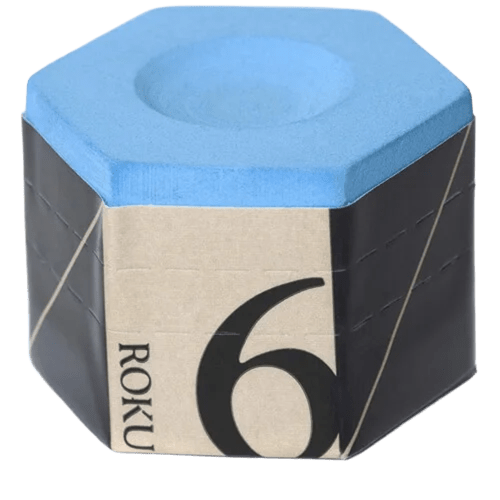
That said, if you ask me, this is the chalk I always use and recommend the most. Fair warning: it’s not cheap. But it’s an investment that lasts for years.
The manufacturer sent me the first one to try out and help spread the word. I liked it so much that in 2025 I bought another one myself, and it’s still working like the first day. If you’re after the best of the best and you play often, it’s an investment that’s genuinely worth it.
Recomendación de Xavi
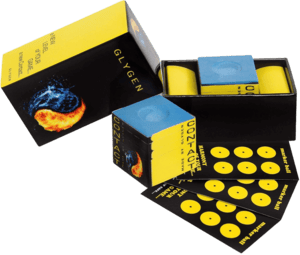
Tiza de billar Glygen
El precio sorprende.
He probado todas las tizas y esta es la que utilizo personalmente. Cuando pones la tiza se adhiere bien a la suela, no salta polvo, ofrece un control increíble y reduce bastante el riesgo de pifiar, incluso aunque se te olvide aplicar tiza durante un tiempo. No ensucia las manos, ni el paño de la mesa, ni las bolas. Debajo de la tiza tiene un potente imán que te puedes poner otro imán dentro de tu bolsillo y lo puedes utilizar como porta tiza.
How to Choose Your First Pool Cue
Choosing your first cue well is one of the most important decisions if you want to learn to play properly from the start. A bad cue can wreck your technique and make you think you’re the problem, when it’s actually your equipment.
What should you look for?
- Balanced weight, between 18 and 21 oz.
- That it’s straight (roll it on the table and check it doesn’t wobble).
- A quality tip (soleta), well glued.
- That when you strike, you feel firmness and control — not vibration or excessive rebound.
- If it’s a break-down cue, that the joint is solid and easy to tighten.
One extra tip for when you’re just starting out: if you don’t yet know what weight feels best in your hand, start with something on the lighter side before investing in a high-end cue — the right weight only becomes clear with practice, not before.
Want to see more professional pool cues? Click here (opens in a new window)
Recomendación de Xavi
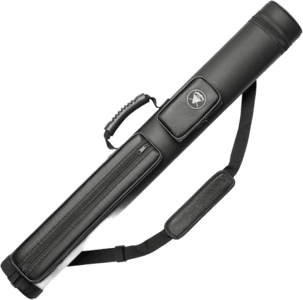
La funda que evita que arruines el taco que tanto te costó elegir
Después de elegir bien el taco, lo último que quieres es que se tuerza guardado en cualquier bolsa, o que la punta se golpee la primera vez que lo metes en el coche. Esta funda rígida existe para el momento exacto en que dejas de preocuparte por eso: forro de gamuza para que no roce, espuma que absorbe el golpe si se cae, y espacio para dos tacos completos. No elegiste bien tu taco para arriesgarlo en el trayecto hasta la sala, verdad!.
Before I move on, I realized there’s an essential accessory I haven’t mentioned yet: the billiards glove.
If you’ve never used one, you probably don’t realize how much smoother it can make every stroke. This is the one I personally use and recommend:
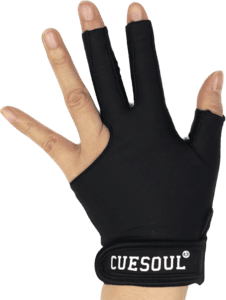
CUESOUL Billiards Glove
If you're left-handed like I am, you know how difficult it can be to find a good billiards glove, since most models are only made for the left hand. That's one of the reasons I like this one so much—you can choose either the right-hand or left-hand version.I've been using it for quite a while, and it has everything you could want: it's affordable, comfortable, and well made. It fits perfectly, stays securely in place while you play, and allows the cue to glide smoothly across your bridge hand.During the summer, it becomes almost essential because it prevents sweat from causing the cue to stick to your hand. It's one of those accessories that, once you've tried it, you'll never want to play without again.
Fundamentals of Pool: The Foundation of Every Good Player
Everything starts with mastering the fundamentals:
- The grip: how you hold the cue with your back hand.
- The bridge: how you support the cue with your front hand.
- The stance: how you position your body in front of the table.
- The stroke: how you execute the shot smoothly and with control.
I break down each of these in detail in the beginner section. If you don’t work on these properly from the start, it’ll be hard to progress.
The 3 Levels to Improve Your Pool Game
Pick the level that matches where you’re at:
Beginner: If you don’t know anything about pool, you’re just starting out and struggling to hold the cue, you feel awkward when you shoot, your straight shots aren’t landing, or your legs and back hurt after playing.
Intermediate: When you already know how to play but struggle with rail shots, applying spin, or things like jumping the cue ball — skills you know you still need to learn.
Advanced: If you already know all of the above and want to sharpen specific weak points in your game. You’re looking to fix fine details, improve your tactics, or refine technical aspects to start winning tournaments.
The Difference Between Pool and Billiards
A lot of people think these are different things, but they actually refer to the same game.
When someone says “let’s play American pool, billiards, or pool!” — they mean eight-ball.
The Most Played Variants on the Planet
Here are the different types — when most players say “let’s go play billiards,” they usually mean American pool or eight-ball.
But when someone wants to play a different variant, they call it by its specific name.
Choose the variant you’d like to learn (opens in a new window):


9-Ball

10-Ball


Blackball


What Is Billiards?
It’s a precision sport centered around a table.
That table is a slate board covered with felt — usually green — with six pockets, in which you use a cue to strike the balls across the table and try to pocket them. Whoever pockets all their balls plus the 8-ball wins.
Billiards goes by many different names depending on where you are: eight-ball, American billiards, pool, eight-ball pool. And in other countries: sinuca, bilardo, biliard, bilyard, bilhar, billard, billiard, piljard.
So if you’re in Mexico, Colombia, Argentina, Peru, Brazil, Spain, the United States, the Dominican Republic, or anywhere else and you hear one of these names, run over and get in on a few games.
It’s usually played between two people and has different types or variants of play, explained above.
The game revolves around a white ball, or cue ball, that both players use.
You use this ball, striking it with your cue, to move the other balls — solids or stripes (you need to pocket one of the two groups of seven balls, which determines which group is yours and which is your opponent’s).
After every shot you need to chalk your cue to avoid a miscue — that sharp, screeching sound your cue makes when it hits the cue ball without enough chalk, or when you try to put too much spin on it — which counts as a foul and costs you your turn.
How Do I Start Playing?
When you’re playing against an opponent, the first thing to settle is who breaks — that’s decided by the lag.

8-Ball, 9-Ball and 10-Ball Opening
One player takes a ball and the other takes the cue ball, places it on the head string, and strikes it toward the far rail — or to put it more simply, the rail at the opposite end — and whoever’s ball ends up closest to the near rail on the return wins the lag.
The break in Eight-Ball, Nine-Ball, and Ten-Ball: whoever wins the lag decides who breaks first, and after that you can agree on whether the winner keeps breaking or you alternate.
After that comes the break shot. If you’re lucky, you’ll pocket a few balls and keep your turn at the table — otherwise, it’s your opponent’s turn.
When you’re about to hit a ball, you need to figure out exactly where to strike it to make the shot. Some players find it easier to line the cue up directly over the ball, while others gauge the point by swinging that ball toward the pocket mentally.
Whichever method you use, my recommendation is to picture a “ghost ball” at the exact point where the cue ball needs to make contact — from there, you build your shot line and set up your stance.
Frequently Asked Questions from Beginners
Is it hard to learn how to play pool? The basic rules aren’t hard to understand, but it does take patience for your body to internalize the stance, the bridge, and the stroke. You’re going to miss shots that look easy during the first few weeks — that’s completely normal, and honestly it’s the fastest way to learn: miss the shot, understand why it happened, and correct it.
Do I need to buy my own cue from day one? It’s not mandatory, but if you’re serious about the game, the sooner you have your own, the faster you’ll improve. Practicing with the same cue every time lets you get used to its weight and balance — something you can’t do if you’re using a different bar cue every weekend.
Why do I miss shots that look easy? Almost always for one of two reasons: you didn’t calculate the object ball’s angle into the pocket correctly, or you hit the ball harder than necessary. A very common beginner mistake is thinking that more power means more accuracy — it’s actually the opposite. Control matters far more than force.
How long does it take to get good? There’s no fixed number — it depends on how much you practice and whether you work on the fundamentals from the start or skip past them. What’s consistent across every player who improves quickly: they practice regularly, they play against people better than them (which corrects your mistakes without you even noticing), and they don’t avoid losing out of pride or embarrassment — losing to someone better is the fastest lesson you’ll get.
What’s the difference between billiards, pool, and carom? Billiards and pool, as you saw above, are basically the same game (eight-ball) just called different things depending on the country. Carom is something else entirely: it’s played on a table with no pockets, using only 3 balls, and the goal is to make your ball touch both of the other two — not pocket them.
Now that you have a sense of how pool is played, pick your level and start putting what you’ve learned into practice.