
Wondering how to get better at pool when you don’t have a table at home?
In one sentence
You can improve at pool without a table: practice your grip and bridge, your stance over the cue, visualization and your stroke, with a 10-minute daily routine.
Don’t worry, you don’t need a full table to improve your skills. In fact, many great players have polished their technique practicing at home with the bare minimum. All you need is consistency, a bit of creativity and knowing which drills to do.
The benefits of practicing without a pool table
Before we get into it, you should know that practicing without a table has big benefits:
- You reinforce your muscle memory.
- You improve your body position.
- You work on visualizing the game.
- And best of all, you can practice every day without leaving the house.
What do you need to get started?
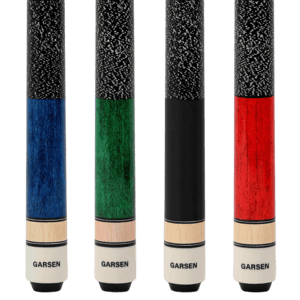
- Your pool cue (a must)
- Chalk
- A smooth surface (a table, a rug, a wood floor, etc.)
- A mirror (optional, but very useful)
- Motivation and discipline
Drill 1: Practice your grip and bridge
It may seem basic, but the way you hold the cue and place your front hand (the bridge) directly affects your accuracy.
Practice this in front of a mirror:
- Hold the cue naturally and firmly.
- Place your front hand as if you were on a table.
- Make sure your wrist is relaxed and the cue slides cleanly through your bridge.
Do it for at least 5 minutes a day.
If you’re a beginner, I recommend reading: How to learn to play pool
Drill 2: Your stance over the cue
Lay the cue on a flat surface and get into position as if you were about to hit a ball.
- Line up your shoulders, arm and eyes.
- Keep your legs firm, apart and stable.
- Check your balance.
This drill helps your body memorize the right position without being at a real table.
Drill 3: Visualization
Close your eyes and picture:
- A ball sitting in front of you.
- The shot angle.
- The perfect stroke.
- The cue ball driving the object ball into the pocket.
Visualization trains your mind as if you were actually doing it.
Drill 4: The stroke motion
Get the cue into position and practice just the stroke motion:
- Keep it smooth and straight, without pushing the cue down or lifting it.
- Do sets of 10 slow, controlled strokes, keeping your body still.
This is key to a clean stroke and to avoiding miscues.
Drill 5: A 10-minute daily routine
- 2 min of grip and bridge
- 2 min of stance and balance
- 2 min of stroking without a ball
- 2 min of visualization
- 2 min of free practice
With just 10 minutes a day you can transform your game.
Not having a table is no excuse.
A cue, a few minutes a day and the desire to improve are more than enough to make progress. Most people don’t practice because they lack motivation, not because they lack a table.
Commit to practicing, even if it’s just 5 minutes a day. I promise your next match won’t be the same.
Let me know how it goes.